← Back to Blog
Unseen Barriers: The High Cost of Fragmented Channel Ecosystems
Many organizations spend years growing their channel ecosystems by adding new distributors, recruiting resellers for new markets, training service partners, and starting enablement programs. They launch partner portals and add more ways to communicate, which can make growth look impressive. However, problems often appear beneath the surface. Growth may slow, partner engagement may become uneven, and customer experiences may differ from region to region. It becomes important to recognize the difference between simply having a large ecosystem and having one that is truly connected, since fragmentation can quietly weaken long-term progress.
Fragmentation occurs when parts of the ecosystem act independently rather than together. Partners might use different systems, teams may follow their own processes, and important information can be scattered in different places. Communication is often disconnected, support teams work separately, and training varies by region. Each of these problems might seem small on its own, but together they make the ecosystem hard to manage, grow, and improve. Fragmentation is not usually a single big problem. Instead, it slowly makes things less efficient, weakens teamwork, and holds back growth, often going unnoticed until results start to drop.
A fragmented channel ecosystem often leads to slower partner activation. When onboarding, training, certifications, and support are not connected, it takes partners longer to become productive. Information is harder to find, training is uneven, and partners waste time dealing with confusing processes instead of focusing on customers. These delays make it take longer to go from recruiting a partner to seeing results, which is especially challenging in competitive markets. Companies may focus on bringing in new partners, but they sometimes miss how fragmentation stops current partners from reaching their full potential, which affects the whole ecosystem’s performance.
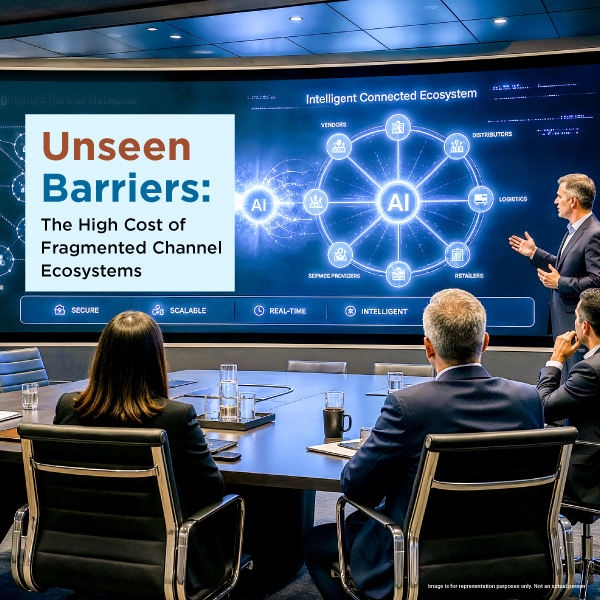
VMI Global helps organizations turn fragmented ecosystems into connected, AI-driven networks. Using our ALLIANCE Channel Readiness Framework, we review the structures, systems, and behaviors that affect ecosystem performance, such as partner onboarding, enablement, communication, workflow integration, collaboration, and AI adoption. By identifying where fragmentation exists, we help organizations build unified partner experiences and support lasting growth. As ecosystems become more complex, VMI Global’s experience helps companies achieve consistency worldwide, collaborate more effectively, and gain clearer insights, setting the stage for a more connected future.
Learn More: Explore the Business Impact of Fragmented Channel Ecosystems